
FAQ
Frequently Asked Questions
-
Polaris draws inspiration from many principles of Waldorf education; meeting children developmentally, educating the whole child (head, heart and hands), integrating art and movement with academics, learning through direct experience, cultivating strong teacher-student relationships, and creating rhythms that allow children to engage deeply with their learning. These principles are reflected throughout our curriculum and school life.
Waldorf education has its historical roots in anthroposophy, the spiritual philosophy developed by Rudolf Steiner. Anthroposophy encompasses a much broader body of ideas, but one aspect that remains particularly relevant to education is the importance it places on self-development; the understanding that a teacher's work with children also asks the teacher to continually observe, reflect upon, and work on themselves.
At Polaris, teachers are not expected to subscribe to anthroposophy as a personal belief system. Our teachers come with their own individual beliefs and perspectives. What we do share is a commitment to ongoing inner and professional development, to observing ourselves as carefully as we observe the children, examining our assumptions and biases, reflecting on our teaching, and continually striving to become more thoughtful and responsive educators. For some teachers this may include meditation or contemplative practice; for others it may take the form of study, artistic work, reflection, mentorship, or other forms of personal and professional growth.
Being a Waldorf-inspired school does not mean that we approach Steiner's ideas as doctrine or assume that a practice should continue simply because it has traditionally been part of the “Waldorf way”. We seek to understand the intention behind the pedagogy, consider it critically in light of contemporary knowledge and the children before us, and retain, adapt, or reconsider practices accordingly.
Note that Anthroposophy is not taught to students, nor are children or families expected to adopt a particular philosophical or spiritual worldview.
-
Polaris is not affiliated with a particular religion, nor do we teach religious doctrine. When we speak about the spiritual dimension of education, we are speaking largely about the inner life of the child and qualities such as awe, wonder, gratitude, reverence, compassion, and a sense of connection to other people and the natural world.
Small rituals help establish rhythm and create moments of pause within a busy day. A class may begin with a verse, for example, or take a moment of gratitude before eating together. These are not intended as religious instruction or practices; rather, they help children transition, become present, and recognize that some moments deserve our attention and gratitude. If the word God appears in a traditional verse, it is used in a broad and universal sense rather than to promote a particular faith.
Stories from religious and cultural traditions also appear throughout the curriculum, but they are brought as stories rather than as statements of belief. Storytelling has an important place in Waldorf-inspired education because stories allow children to encounter human experiences through imagination while also opening windows into different places, peoples, histories, and ways of seeing the world. Through these stories, children can begin to appreciate both the richness of human diversity and the many values that connect us across cultures and traditions, qualities such as compassion, courage, generosity, kindness, justice, and caring for others. In this way, stories can broaden a child’s understanding of the world while also helping them recognize our shared humanity.
The curriculum may include stories and traditions from Christianity, Judaism, Islam, Buddhism, Hinduism, Indigenous cultures, and other traditions as children move through the grades. Depending on the grade, students may encounter a creation story from the Hebrew Bible, the Haudenosaunee story of Sky Woman and Turtle Island, the story of Prophet Yusuf from the Quran or a Buddhist Jataka tale.
The purpose is not to tell children what they should believe. Rather, stories from different times, cultures, and traditions allow them to encounter recurring human qualities such as kindness, courage, compassion, gratitude, justice, forgiveness, generosity, and responsibility, while also beginning to appreciate the many different ways people have understood their relationship with one another and the world.
Seasonal traditions serve a similar purpose. Festivals and celebrations help children notice the changing seasons and create opportunities for community, gratitude, reflection, and connection. We acknowledge that Waldorf education has Eurocentric and Christian roots, and that many of the festivals traditionally celebrated in Waldorf schools come from that history. Rather than simply discarding all of these traditions, we look carefully at the meaning behind them and consider how that essence can be held in a way that is inclusive of our present-day community.
For example, the theme of carrying light within us as winter approaches (the darkest time of year) is found across many cultures and traditions; although our Lantern Festival and Spiral of Light have Christian origins, our interpretation of these festivals, honour this universal theme so that all can participate. Polaris also looks to the cultures, traditions, and lived experiences within our own community for inspiration, so that our seasonal celebrations reflect and honour the many people who are part of Polaris.
It is felt that there is something nourishing in these rhythms for adults as well as children. Traditions can create a sense of continuity, belonging, and anticipation in community life for our whole community.
-
Polaris welcomes families from many cultural backgrounds, religious and non-religious traditions, family structures, gender identities, and sexual orientations. A family does not need to share a particular spiritual philosophy, worldview, or cultural tradition to belong at Polaris.
We want children to experience both the security of knowing who they are and the richness of encountering people whose experiences and perspectives may be different from their own. Respect, compassion, curiosity, and human dignity are fundamental to the kind of community we are working to create. Our aim is for every child and family to feel that they are seen, respected, and able to participate fully in school life.
We also recognize that inclusion is ongoing work rather than something a school can simply declare complete. Polaris has committed to examining our own biases, reviewing curriculum and its delivery, and looking carefully at festivals, policies, and practices to ensure they reflect our diverse community and our commitment to equity and inclusion.
-
Some of Rudolf Steiner’s writings and lectures contain ideas and statements about race and human hierarchy that are harmful and incompatible with the values of Polaris. We believe it is important to acknowledge this openly rather than dismiss, minimize, or defend those aspects of his work.
Polaris unequivocally rejects ideas that diminish the dignity or equality of any person. Our Diversity, Equity and Inclusion statement affirms AWSNA's position that statements by Steiner that contradict respect for human dignity are not the basis for Waldorf education and are unequivocally denounced. Polaris has also undertaken DEIJ work with Alma Partners and is committed to exploring bias, curriculum, festival life, policies, and practices as part of the ongoing work of creating a more inclusive school for all regardless of race, gender, ability or religious beliefs.
Although we are Waldorf-inspired, this does not mean accepting everything Steiner wrote. It requires those at Polaris to think critically about the traditions we have inherited and to ensure that what we bring to children today reflects the school’s commitment to dignity, equity, inclusion, and belonging.
-
Science, questioning, observation, and critical thinking are important parts of a Polaris education. Our Grade School curriculum includes mathematics, science, language arts, history, geography, and French alongside the arts, movement, music, handwork, and outdoor learning. The aim is not simply to transmit information, but to help students make connections, investigate ideas, solve problems, and gradually develop the capacity to think independently.
In keeping with the Waldorf-inspired approach, science often begins with direct experience and careful observation before developing concepts and explanations. This progression from observation toward abstraction is a common approach in many Waldorf Schools.
As students mature, the curriculum increasingly asks them to question, analyze, compare perspectives, form reasoned conclusions, and articulate their thinking. The goal is not to tell students what to think, but to develop the curiosity, knowledge, and confidence to think for themselves. Note that spiritual or philosophical ideas are not presented as substitutes for scientific evidence.
-
Yes, a Waldorf approach builds literacy from a rich foundation of oral language, storytelling, poetry, rhyme, movement and imagination. Reading is explicitly taught at Polaris beginning in Grade 1. What differs from some educational settings is the pace and the way literacy is introduced. Rather than expecting every child to reach exactly the same reading level at the exact same time, we recognize that literacy develops along a continuum. Some children may begin reading independently in Grade 1, while others may reach that point in Grade 2 or Grade 3.
Our aim is to give children the instruction, practice, and time they need to become confident, capable readers without creating unnecessary anxiety or comparison in the early grades. When children feel that they are expected to read at the same level as their peers before they are developmentally ready, they can begin to see themselves as “behind” or “not good at reading.” A loss of confidence at this early stage can make reading feel stressful and discourage children from taking the very risks and making the mistakes that are an important part of learning. We want children to experience themselves as developing readers, with the confidence to keep trying and the understanding that progress may look different from one child to another.
Allowing children to develop at their individual pace does not mean simply waiting for reading to happen on its own. We focus on instruction in phonemic awareness, decoding among other literacy skills, regular practice, differentiated instruction, and assessment of children's progress. At Polaris, teachers observe each child's development closely and adjust instruction and support accordingly.
Our goal is not simply for children to read as early as possible, but for them to become strong, confident readers who understand what they read, enjoy language and literature, and approach reading with curiosity rather than fear of getting it wrong.
-
Respecting individual development does not mean overlooking signs that a child may need additional support. Teachers monitor students' literacy development and look at their progress in areas such as phonemic awareness, sound-symbol relationships, decoding, fluency, comprehension, spelling, and writing.
If a child's progress suggests a possible learning difference such as dyslexia, dysgraphia, or another area of concern, we would speak with the family rather than simply assuming the child needs more time. The family can decide on whether or not to pursue an assessment and/or we can explore additional support beyond what the school can offer.
We strive to honour each child's developmental pace while also recognizing that early identification and appropriate support can make an important difference when a child is struggling.
Note that Polaris does not have the human resources to provide one to one or remedial support at this time. Additional support would be the parent’s/guardian’s responsibility.
-
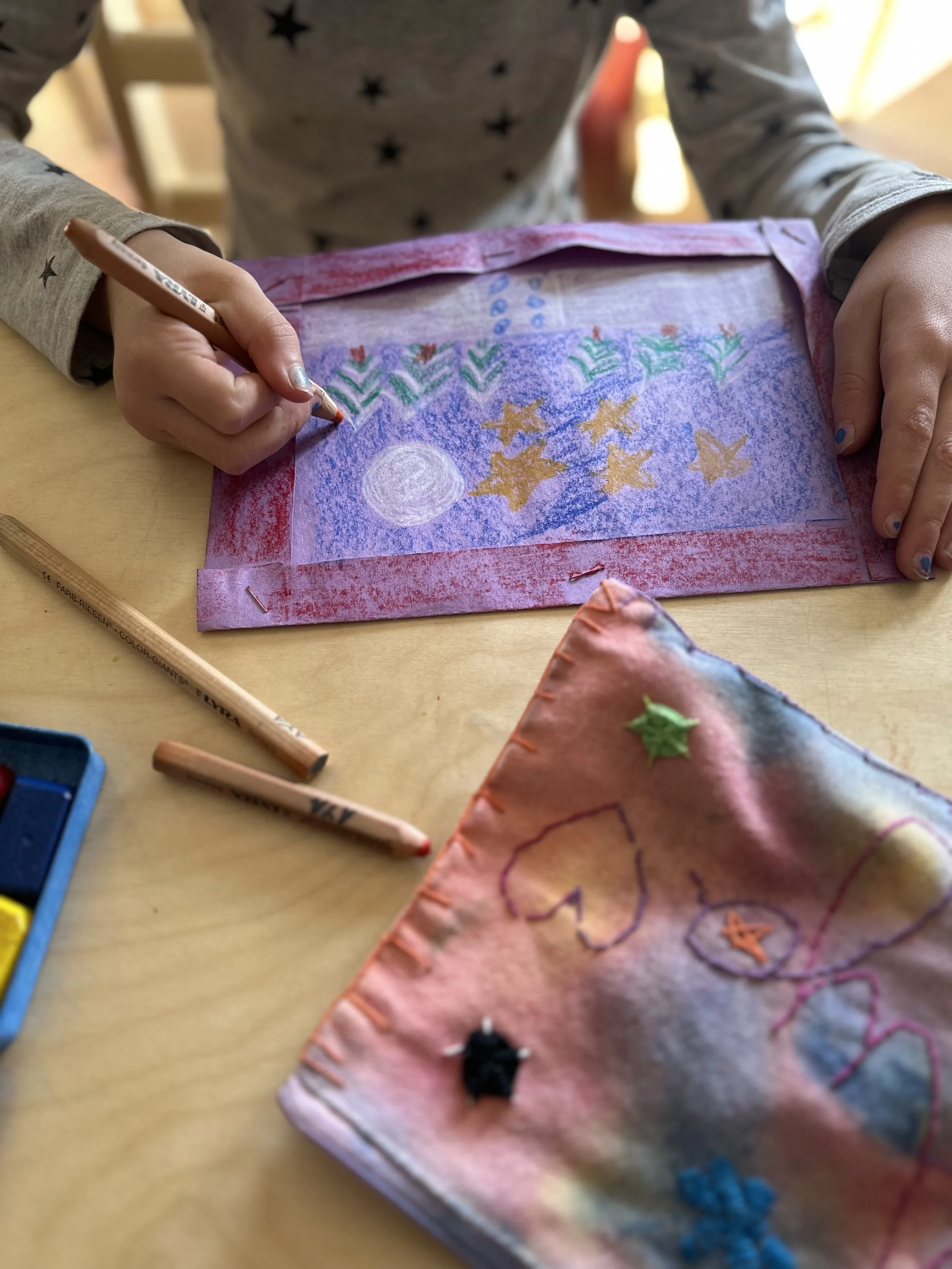
Yes, just because Polaris integrates the arts, movement and music with core academic subjects does not mean we are less academic. In fact, it is felt that we offer a much fuller educational experience to students. Polaris offers a rich Grade 1 to 8 curriculum that includes mathematics, language arts, science, history, geography, French, and other academic subjects, complemented by music, art, handwork, movement, drama, and outdoor learning.
What is distinctive is how those subjects are taught. Rather than relying primarily on textbooks, worksheets, or memorization, teachers use story, observation, experimentation, movement, artistic work, discussion, writing, and hands-on experience to help students understand ideas deeply and make connections between subjects. The curriculum becomes increasingly analytical and abstract as students mature, supporting the development of critical thinking and independent judgment.
Polaris also uses a spiralling approach to learning: important ideas are introduced, explored deeply, given time to settle, and revisited later with greater complexity. The aim is not simply to cover material, but to develop understanding, curiosity, creativity, and the ability to think for oneself.